
Je hebt waarschijnlijk wel eens de iconische gitaarriffs van “Hocus Pocus” gehoord, maar ken je de meesterbrein achter die noten? Maak kennis met Jan Akkerman, een Nederlandse gitarist die het spel heeft veranderd met zijn unieke mix van rock-, jazz- en klassieke stijlen. Van zijn cruciale rol in de progressieve rockband Focus tot zijn dynamische solocarrière, Akkermans innovatieve technieken en melodische improvisaties hebben een blijvende indruk achtergelaten. Maar wat is het verhaal achter deze invloedrijke muzikant? En hoe blijft zijn werk door de jaren heen resoneren? Laten we het leven en de nalatenschap van deze gitaarvirtuoos verkennen.
Belangrijkste punten
- Jan Akkerman, geboren in 1946, is een gerenommeerde Nederlandse gitarist die bekend staat om zijn innovatieve vermenging van klassieke muziek, jazz, rock en blues.
- Hij was een belangrijk lid van de band Focus en droeg bij aan hun internationale succes met hits als ‘Hocus Pocus’.
- Akkermans unieke gitaarstijl kenmerkt zich door melodische improvisatie, complexe fingerstyle-technieken en een sterke nadruk op creatieve expressie.
- Zijn solocarrière, die begon met een titelloos debuutalbum in 1977, toont zijn genre-tartende vaardigheid en voortdurende innovatie in muziek.
- Hij heeft talloze prijzen ontvangen, waaronder de titel ‘Beste Gitarist ter Wereld’ van Melody Maker in 1973.
Vroege Leven van Jan Akkerman
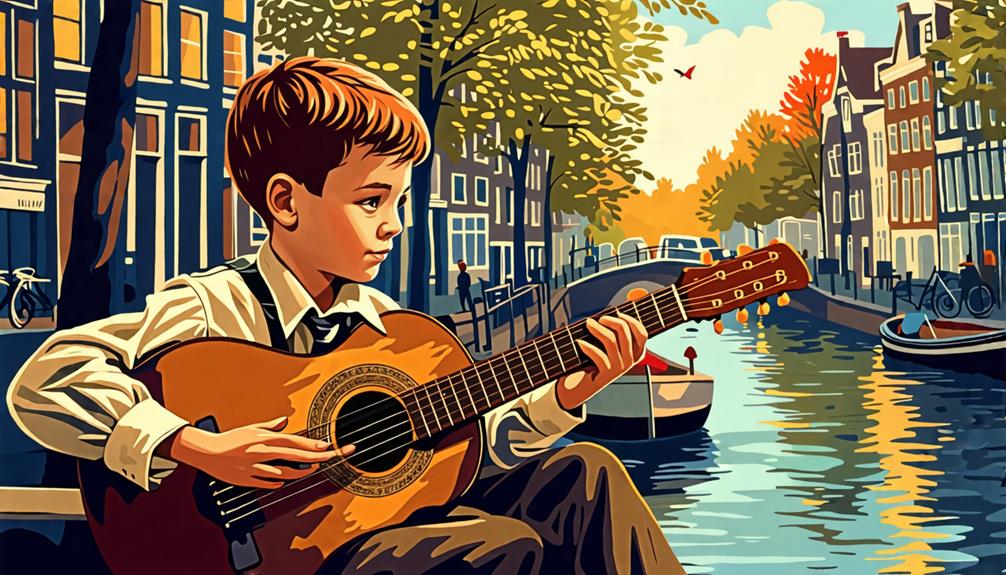
Duik in het begin van Jan Akkerman, een naam die in de muziekwereld weerklinkt als een goed aangeslagen akkoord. Geboren in Nederland in 1946, was Akkermans familieachtergrond diep geworteld in de kunsten; zijn vader was een professionele trompettist, en zijn moeder een bekwame violiste. De passie voor muziek van zijn ouders ontketende dezelfde vonk in Akkerman, waardoor zijn pad naar muzikale grootsheid werd bepaald.
Akkermans jeugdhobby’s gingen niet over het spelen van voetbal of het lezen van stripboeken; in plaats daarvan was hij gefascineerd door het ingewikkelde ballet van vingers op snaren, de symfonie van noten die voortkwamen uit de instrumenten van zijn ouders. De woonkamer van zijn familie werd zijn eerste podium, waar hij op een oude gitaar tokkelde en de uitvoeringen van zijn ouders nabootste. Dit was geen kinderachtig spel, het was de vonk van uitvinding, de geboorte van een wonderkind.
In Akkerman zie je een genie dat niet alleen gevormd is door genen, maar door een omgeving die innovatie aanmoedigde en een jeugd die zijn muzikale nieuwsgierigheid voedde. Zijn familieachtergrond en jeugdhobby’s waren de vruchtbare grond die het zaad van zijn buitengewone talent voedden. Dus dompel je onder in het verhaal van Akkerman, de jongen die een legende zou worden.
Akkermans muzikale begin
Je vraagt je misschien af wat het muzikale genie in Jan Akkerman heeft aangewakkerd. Laten we beginnen met het verkennen van zijn vroege muzikale invloeden en de cruciale eerste gitaarlessen die zijn unieke stijl vormden. Het is een opwindende reis, een die leidde tot zijn doorbraak in de muziek en zijn plaats bevestigde als een gerespecteerde figuur in de wereld van de gitaar.
Vroege muzikale invloeden
Vanuit het hart van Amsterdam, te midden van de bruisende stad, ontdekte de jonge Jan Akkerman zijn liefde voor muziek. Zijn vroege muzikale invloeden waren een smeltkroes van verschillende instrumentale invloeden en muzikale genres die zijn innovatieve geluid vormden. Je kunt de echo’s van deze vroege inspiratiebronnen horen in de ingewikkelde melodieën en harmonieën die Akkermans kenmerkende stijl zijn geworden.
De vroege muzikale invloeden van Akkerman zijn divers en fascinerend. Hier is een kort overzicht:
- Klassieke Muziek: Akkerman beschouwt klassieke muziek als een fundamentele invloed. De structuur, discipline en schoonheid van dit genre hebben zijn gitaartechniek diepgaand beïnvloed.
- Jazz: De improvisatiegeest van jazz voedde Akkermans creatieve vuur en moedigde hem aan om te experimenteren met geluid en vorm.
- Rock ‘n’ Roll: De rauwe energie en passie van dit genre vonden een weg naar Akkermans hart en vormden zijn dynamische performance-stijl.
- Blues: De soulvolle, expressieve aard van de blues liet een onuitwisbare indruk achter op Akkermans muzikale gevoeligheden.
Deze vroege invloeden kwamen samen om een unieke en innovatieve muzikale stijl te creëren die wereldwijd publiek heeft geboeid. Dit is de oorsprong van Akkermans muzikale reis, een weerspiegeling van de kracht van diverse invloeden die samenkomen om iets werkelijk buitengewoons te creëren.
Eerste Gitaarlessen
Terwijl de vroege invloeden van Akkerman het canvas vormden, legden zijn eerste gitaarlessen de basis voor zijn muzikale meesterschap. Als je je onderdompelt in Akkermans muzikale reis, zul je merken dat de eerste gitaarakkoorden vaak het meest resoneren en weerklinken in zijn unieke stijl. Zijn lesmethoden waren niet louter traditionele instructiemethoden, maar een verkenning van innovatie en creativiteit.
Stel je voor dat je in zijn schoenen staat, je eerste gitaar vasthoudend, het gewicht en potentieel ervan voelend in je handen. De rauwe energie en opwinding van het onbekende vulden de kamer. Je leert niet alleen een instrument bespelen, je legt de basis voor je toekomst. Elke les was een stapsteen, een pad naar muzikale verlichting, terwijl Akkerman ijverig werkte om de rauwe, ongetemde geluiden om te vormen tot harmonieuze melodieën.
Zijn toewijding was duidelijk in de uren die hij besteedde aan oefenen en zijn vak perfectioneren. Hij leerde niet alleen akkoorden en toonladders, hij streefde ernaar om de taal van de muziek te begrijpen, om te converseren met zijn gitaar. Deze passie voor innovatie en het verlangen om grenzen te verleggen waren al zichtbaar in zijn eerste gitaarlessen, en vormden zijn unieke geluid en zette de toon voor zijn opmerkelijke carrière. Zijn beginjaren bewijzen zeker dat iemands eerste gitaarlessen een hoeksteen kunnen zijn voor muzikale grootsheid.
Doorbraak in Muziekcarrière
De vonk van genialiteit die ontstond tijdens Akkermans vroege gitaarlessen ontvlamde volledig toen hij zijn muziekcarrière begon. Zijn doorbraakmomenten waren geen toeval, ze waren het resultaat van onophoudelijke oefening, aangeboren talent en vurige passie. Zijn carrière mijlpalen zijn net zo gevarieerd als indrukwekkend.
Laten we vier belangrijke mijlpalen verkennen die zijn doorbraak in de muziekindustrie markeerden:
- Aansluiting bij Focus: Akkermans bekwaamheid bleef niet lang onopgemerkt. Hij sloot zich aan bij de Nederlandse band Focus, waar hij een unieke mix van rock, jazz en klassieke invloeden inbracht die hen onderscheidde van de rest.
- Succes van ‘Hocus Pocus’: Zijn instrumentale magie op ‘Hocus Pocus’ bracht de band internationale erkenning, zonder twijfel een doorbraakmoment.
- Lancering van Solo Carrière: Akkerman beperkte zijn genialiteit niet tot Focus. Hij begon een solocarrière en rekte daarmee zijn artistieke grenzen verder op.
- Erkenning en Prijzen: Zijn innovatieve gitaarspel leverde hem de titel ‘Beste Gitarist ter Wereld’ van Melody Maker op, een bewijs van zijn talent en invloed.
Akkermans reis laat zien dat je met passie, innovatie en onwankelbare toewijding je eigen unieke symfonie kunt creëren in het grote concert van het leven.
De band Focus joinen
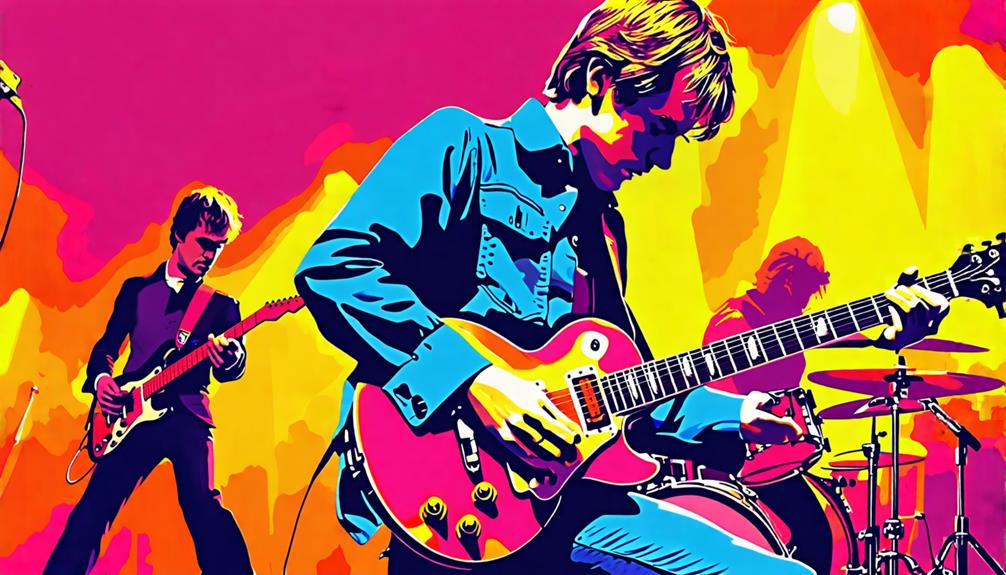
Stel je voor dat je in je late tienerjaren bent en de schijnwerpers van een rockband betreedt die op het punt staat internationale roem te bereiken. Dat is precies wat er gebeurde met Jan Akkerman toen hij zich bij de band Focus aansloot. De dynamiek van Focus stond op het punt een innovatieve wending te nemen met Akkermans integratie.
Het kenmerkende geluid van de band was een fusie van rock, jazz en klassieke invloeden, maar ze wilden de grenzen nog verder verleggen. Zie je, Focus ging niet alleen over het vasthouden aan de status quo. Ze wilden deze uitdagen, en Akkerman was de perfecte aanvulling hiervoor.
Akkerman was niet zomaar een gitarist; hij was een muzikale visionair. Zijn technische bekwaamheid en unieke benadering van de gitaar bliezen nieuw leven in het geluid van de band. Maar het ging niet alleen om zijn spel. Akkermans integratie in de band veranderde ook de groepsdynamiek. Zijn creatieve inbreng en frisse perspectief hielpen de toekomstige koers van de band vorm te geven.
Door zich bij Focus aan te sluiten, werd Akkerman niet alleen deel van een band. Hij werd deel van een beweging, een verschuiving in het muzikale landschap die een blijvende impact zou hebben. En geloof me, dit was nog maar het begin voor Jan Akkerman en Focus.
Belangrijke albums met focus
Diep duikend in hun muzikale reis, produceerden Jan Akkerman en Focus enkele iconische albums die het geluid van progressieve rock aanzienlijk vormden. Hun onverschrokken experimenteren en onophoudelijke streven naar innovatie leverden een muzikale evolutie op die vandaag de dag nog steeds weerklinkt.
Hier is een blik op vier belangrijke albums die cruciale momenten in hun reis markeerden:
- In and Out of Focus (1970): Dit debuutalbum gaf een voorproefje van de unieke fusie van rock, jazz en klassieke elementen waar ze bekend om zouden worden.
- Moving Waves (1971): Met de hit ‘Hocus Pocus’ vestigde het hun reputatie voor het mengen van complexe arrangementen met pakkende hooks.
- Focus 3 (1972): Een dubbelalbum dat hun meesterschap in uitgebreide composities toonde, voortbouwend op Akkermans klassieke opleiding.
- Hamburger Concerto (1974): Dit wordt beschouwd als hun magnum opus, met het titelnummer als een 20 minuten durende suite, een bewijs van hun muzikale durf.
Als je deze albums verkent, zul je jezelf onderdompelen in een unieke geluidslandschap gecreëerd door Akkermans behendige vingers op de gitaar snaren. Elk album vertegenwoordigt een hoofdstuk in hun muzikale evolutie, een bewijs van hun creatieve genialiteit en blijvende invloed in het domein van progressieve rock.
Akkermans Unieke Gitaarstijl
Het genie achter deze cruciale albums ontleden, kan men niet anders dan zich verwonderen over Akkermans unieke gitaarstijl. Het is een onderscheidende mix van melodische improvisatie en vingerstijltechnieken die hem onderscheiden van zijn tijdgenoten.
Je hoort de vloeiendheid in Akkermans spel, een naadloze beweging tussen noten die een lyrische kwaliteit creëert, bijna alsof zijn gitaar zingt. Zijn melodische improvisatie gaat niet alleen over spontaniteit; het gaat over emotie en verhalen vertellen. Elke noot heeft een doel, een onderdeel van het verhaal dat hij ontvouwt. Het is niet zomaar muziek, het is een sonische reis.
Dan is er zijn beheersing van vingerstijltechnieken. Je kunt de ingewikkelde tokkelpatronen en de percussieve slagen op de gitaar niet verwarren. Dit is waar Akkermans muzikaliteit echt schittert, in de precieze controle van zijn vingers, die een rijk, gelaagd geluid produceren dat even ritmisch als melodisch is.
Akkermans stijl is niet alleen een weerspiegeling van zijn technische bekwaamheid, het is een demonstratie van zijn creativiteit, zijn bereidheid om grenzen te verleggen en te herdefiniëren wat mogelijk is op een gitaar. Het gaat niet alleen om het spelen van de juiste noten; het gaat om het spelen van de noten die goed voelen. Dat is de essentie van Akkermans gitaarstijl.
Hoogtepunten van de Solo Carrière
Sinds hij eind jaren zeventig op eigen houtje begon, heeft Jan Akkerman een pad gebaand met zijn solocarrière. Zijn soloalbums zijn een weerspiegeling van zijn muzikale evolutie, elk een nieuwe verkenning van geluid en stijl. Je zult merken dat zijn discografie een schatkamer is van innovatieve composities, die elk zijn beheersing van de gitaar laten zien.
Hier zijn vier belangrijke hoogtepunten van Akkermans solocarrière:
- Zijn debuut soloalbum, “Jan Akkerman”, uitgebracht in 1977, waar hij begon zijn eigen geluid te vestigen.
- Het album “Tabernakel”, waar hij op ingenieuze wijze rock en klassieke muziek mengde, waardoor een nieuw sonisch landschap ontstond.
- Zijn uitstapje naar de jazzfusion met het album “Eli”, waarin hij zijn veelzijdigheid en vermogen om genres te overstijgen liet zien.
- De consistente uitgave van nieuwe muziek gedurende decennia, wat zijn onophoudelijke passie en toewijding aan muzikale verkenning illustreert.
Deze projecten onthullen Akkermans onophoudelijke innovatie en streven naar muzikale perfectie. Je wordt aangemoedigd om dieper in zijn discografie te duiken en je onder te dompelen in zijn levendige muzikale reis. Het is een weerspiegeling van zijn status als een pionier, die voortdurend de grenzen van wat mogelijk is met een gitaar verlegt.
Samenwerkingen en Gastoptredens
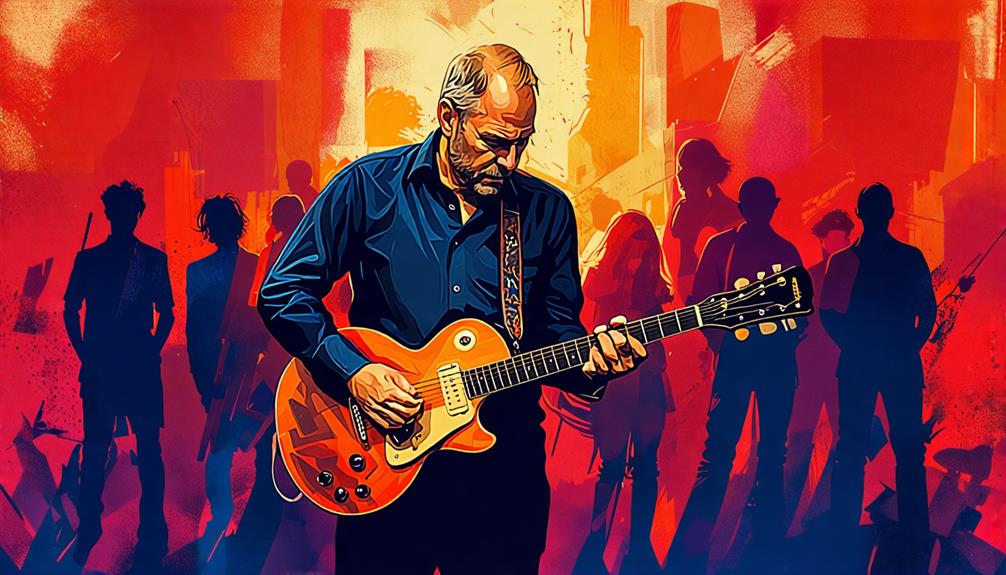
Naast zijn uitgebreide solowerk is Jan Akkermans verreikende muzikale invloed ook duidelijk zichtbaar in zijn verschillende samenwerkingen en gastoptredens. Zijn unieke talent komt in deze samenwerkingen naar voren en voegt een onderscheidend tintje toe aan elk project.
Een van zijn meest opmerkelijke samenwerkingsprojecten was met de Nederlandse progressieve rockband Focus. Zijn mix van rock, jazz en klassieke elementen hielp de band naar internationale roem te stuwen. Zijn behendige gitaarriffs en innovatieve technieken waren van cruciaal belang bij het creëren van het unieke geluid van de band. Je kunt Akkermans bijdrage aan hun hits zoals “Hocus Pocus” en “Sylvia” niet over het hoofd zien, waardoor hij een banbrekende kracht in de muziek werd.
Naast zijn werk met Focus heeft Akkerman ook belangrijke gastoptredens gedaan met tal van andere muzikanten. Van BB King tot Paco de Lucia, zijn diverse samenwerkingen weerspiegelen zijn veelzijdigheid en bereidheid om genregrenzen te overschrijden. Of het nu jazz, rock of klassiek is, Akkermans gitaarspel versterkt het muzikale verhaal en brengt een frisse blik op elk stuk.
Bij elke samenwerking en gastoptreden zie je Akkermans constante evolutie als muzikant, waarbij hij grenzen verlegt en gitaarspel opnieuw definieert. Het is in deze samenwerkingen dat zijn innovatieve geest echt tot leven komt.
Akkermans Invloed op Muziek
Stel je de wereld van muziek voor als een dynamisch canvas. Denk nu aan Jan Akkerman als een pionierende kunstenaar, die dat canvas inkleurt met zijn revolutionaire gitaartechnieken en onderscheidende stijl. Zijn bijdragen zijn instrumentaal geweest in de muzikale evolutie en zijn werk heeft grote culturele betekenis.
- Muzikale Evolutie: Akkermans unieke mix van rock, jazz en klassieke muziek heeft een nieuwe golf van geluid geïntroduceerd, die talloze muzikanten en fans heeft beïnvloed.
- Culturele Betekenis: Zijn werk, dat zowel traditionele als eigentijdse elementen weerklinkt, heeft de kloof tussen verschillende muziekculturen overbrugd, waardoor een gevoel van eenheid en gedeelde waardering wordt bevorderd.
- Innovatie: Akkermans bereidheid om te experimenteren met verschillende muziekstijlen en -technieken heeft de muziekindustrie vooruitgestuwd, waarbij de grenzeloze mogelijkheden van geluid worden getoond.
- Inspiratie: Zijn passie en toewijding hebben velen geïnspireerd om hun creativiteit via muziek te uiten, waardoor de volgende generatie muzikanten wordt gevormd.
Akkermans diepe impact op muziek is onmiskenbaar. Zijn innovatieve geest, gecombineerd met zijn technische beheersing, heeft niet alleen zijn carrière gevormd, maar ook de bredere wereld van muziek. Zijn invloed blijft weerklinken, ons herinnerend aan de kracht van muziek om te verbinden, te inspireren en te evolueren.
Prijzen en Erkenningen
A:\gpt4\zimmwriter_alternative_version\output\Who_Is_Guitarist_Jan_Akkerman_0005.jpg
In het domein van muziek zijn Jan Akkerman’s buitengewone talent en innovatie niet onopgemerkt gebleven. Zijn unieke fusie van rock, jazz en klassieke stijlen, gecombineerd met zijn technische vaardigheid en creatieve flair, hebben hem een veelvoud aan prijsnominaties en onderscheidingen in de industrie opgeleverd. Je zult zijn naam tegenkomen op lijsten van de grootste gitaristen aller tijden, een reflectie van zijn blijvende invloed en de hoge achting waarin hij door zijn collega’s wordt gehouden.
In 1973 werd Akkerman door Melody Maker, een prominente muziekpublicatie, uitgeroepen tot ‘Beste Gitarist ter Wereld’, waarbij hij gerenommeerde artiesten zoals Eric Clapton en Jimmy Page versloeg. Dit was geen eenmalige erkenning; zijn innovatieve composities en uitvoeringen bleven lovende kritieken ontvangen en leverden hem prestigieuze prijzen op. Denk aan de ‘Golden Harp,’ een hoog aangeschreven Nederlandse onderscheiding die hij ontving voor zijn bijdragen aan de muziek. Het is een erkenning die zijn status als pionier, een baanbreker die de grenzen van wat mogelijk is met zes snaren en een versterker heeft verlegd, bevestigt.
Het respect dat Akkerman in de muziekwereld afdwingt, is onmiskenbaar. Zijn prijzen en erkenningen zijn niet zomaar trofeeën op een plank; ze zijn de manier waarop de industrie een revolutionaire artiest erkent die het gitaarspel voor altijd heeft veranderd.
Jan Akkerman Vandaag
Zelfs nu blijft de muziek van Jan Akkerman resoneren en betoveren, met zijn tijdloze aantrekkingskracht en innovatieve geest. Hij blijft de grenzen van de muziek verleggen, puttend uit zijn eclectische invloeden om unieke en inspirerende klanken te creëren.
- Akkermans invloeden: Geworteld in jazz, blues en rock, blijft zijn muzikale opleiding zich voortdurend ontwikkelen, waarbij elementen van klassieke en hedendaagse muziek worden opgenomen.
- Akkermans nalatenschap: Door zijn productieve carrière heeft hij een onuitwisbare stempel gedrukt op de wereld van de gitaarmuziek, waarbij hij talloze muzikanten heeft beïnvloed met zijn revolutionaire technieken en muzikale filosofie.
- Akkermans huidige projecten: Hij rust niet op zijn lauweren. Akkerman blijft nieuwe muziek produceren en live optreden, waarbij hij zijn innovatieve stijl aan een geheel nieuwe generatie laat zien.
- Akkermans muzikale filosofie: Akkerman gelooft in het verleggen van grenzen en zoekt voortdurend naar nieuwe manieren om de mogelijkheden van de gitaar te herdefiniëren.
Als je Akkerman live ziet optreden, zul je betoverd worden door zijn meesterschap en creativiteit. Zijn gitaartechnieken zijn ongeëvenaard, waarbij snelheid, precisie en een diep begrip van muziektheorie worden gecombineerd. Vandaag de dag speelt hij niet alleen muziek; hij vormt een nalatenschap die blijft inspireren en boeien over de hele wereld. Dompel jezelf onder in zijn wereld en je zult een fusie van traditie en innovatie ontdekken die echt Akkermans eigen is.